Research Highlights

Behind the research

School is back, but the heat remains: children’s exposure in a warming climate

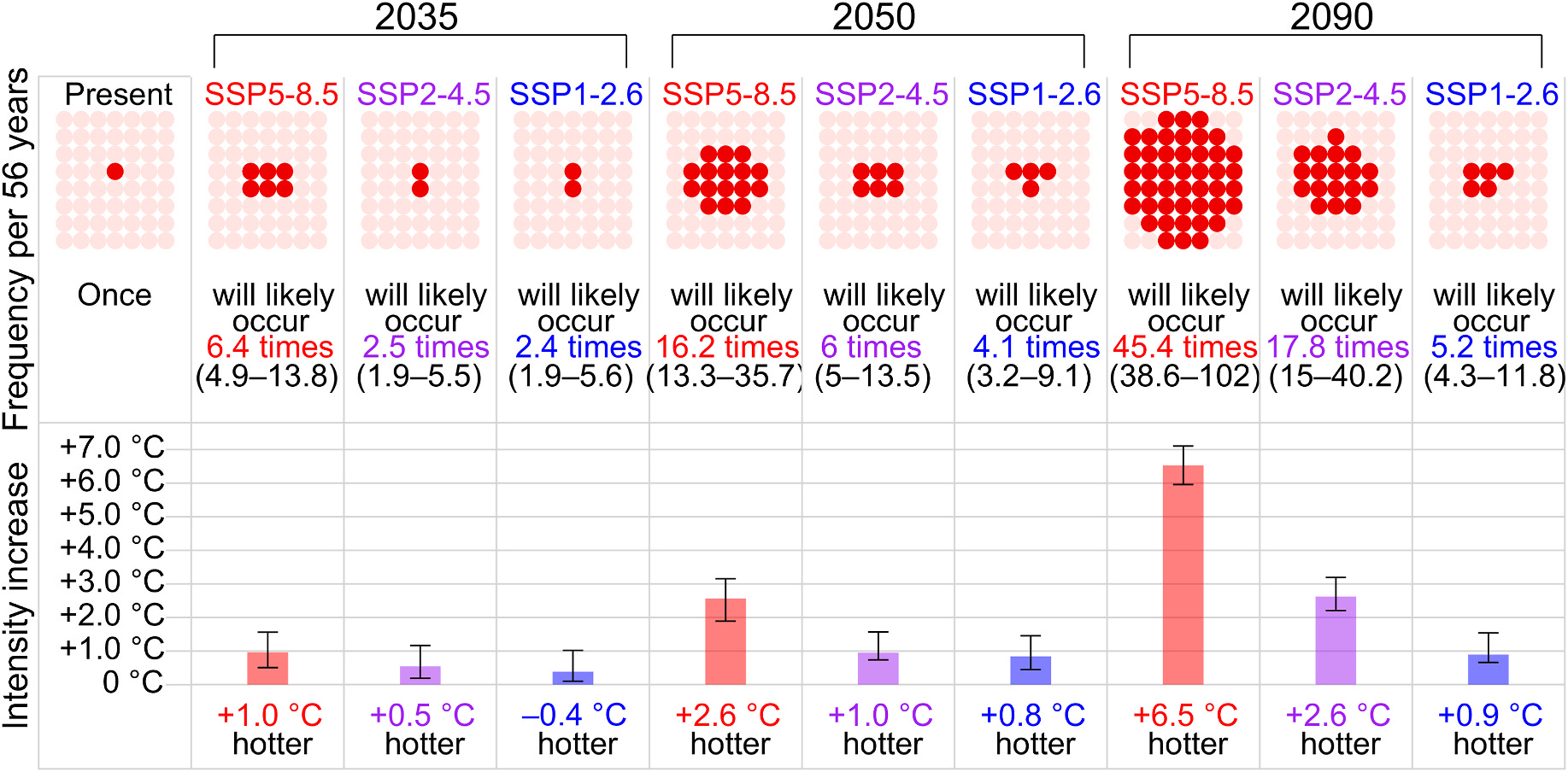
This study connects extreme-heat attribution with children’s exposure, showing that human-induced climate change has made autumn heatwaves like the one during school reopening in 2024 more likely and more intense, while increasing children’s exposure. The child population is projected to decline as heat intensifies, with these opposing changes shaping total exposure. Even where fewer children bring the total down, those living and attending school in the region will face more frequent and intense heat at the start of the school year.
Read article →
Future frequency and intensity of school-reopening heat under different emissions pathways, Figure 3.

Record cold in a record-warm year: eastern China in December 2023

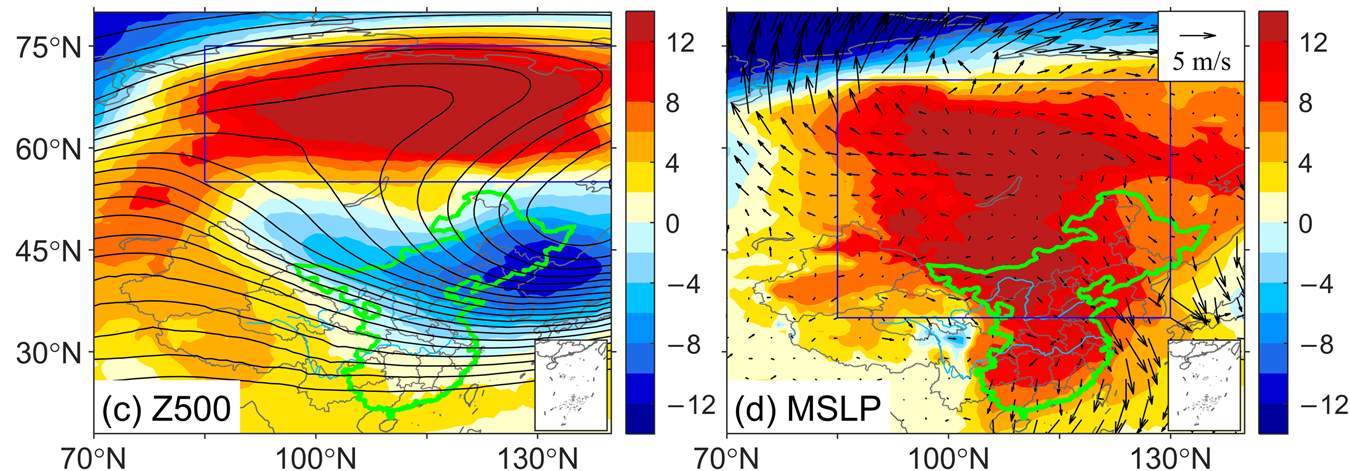
This study examines the record-breaking cold spell in eastern China in December 2023, a striking event in what was then the warmest year on record globally. Exceptional large-scale circulation drove the event itself, while human-induced climate change made similar cold spells less likely and less severe overall. CMIP6 analysis shows that human influence slightly strengthened the circulation favourable for cold weather, but this cooling effect was much smaller than the warming of the climate background. Similar cold spells are projected to decline with continued warming; under low emissions, that decline slows and later partly reverses as global warming levels off.

Read article →
Blocking and the Siberian High during the 2023 cold spell, Figure 1c–d.

After the 40°C holiday: rapid attribution of North China’s heatwave

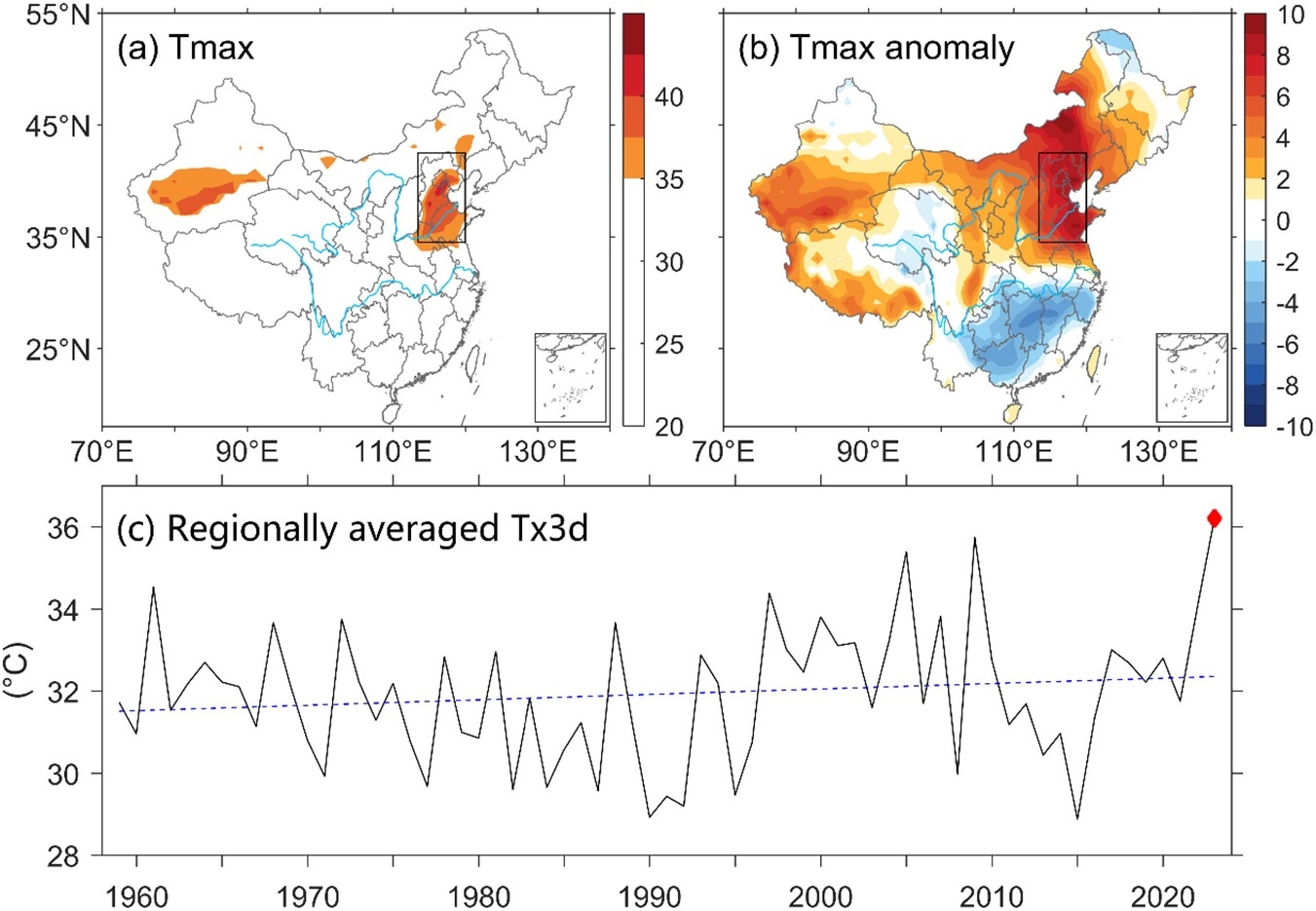
This rapid attribution study examines the record-breaking heat over North China during the June 2023 Dragon Boat Festival holiday. CMIP6 simulations show that human-induced climate change made such three-day heat events about 3.6 times as likely and 1.0°C more intense. Even under a low-emissions pathway that reaches net-zero CO₂ emissions, similar events are projected to remain more frequent and intense toward the end of the century than in the 2023 climate. Cutting emissions can substantially limit the increase, while adapting to extreme heat remains a long-term task.

Read article →
North China’s three-day heat in 2023: spatial patterns and historical series, Figure 1.

When heavy rain meets heat: attributing a compound event across regions

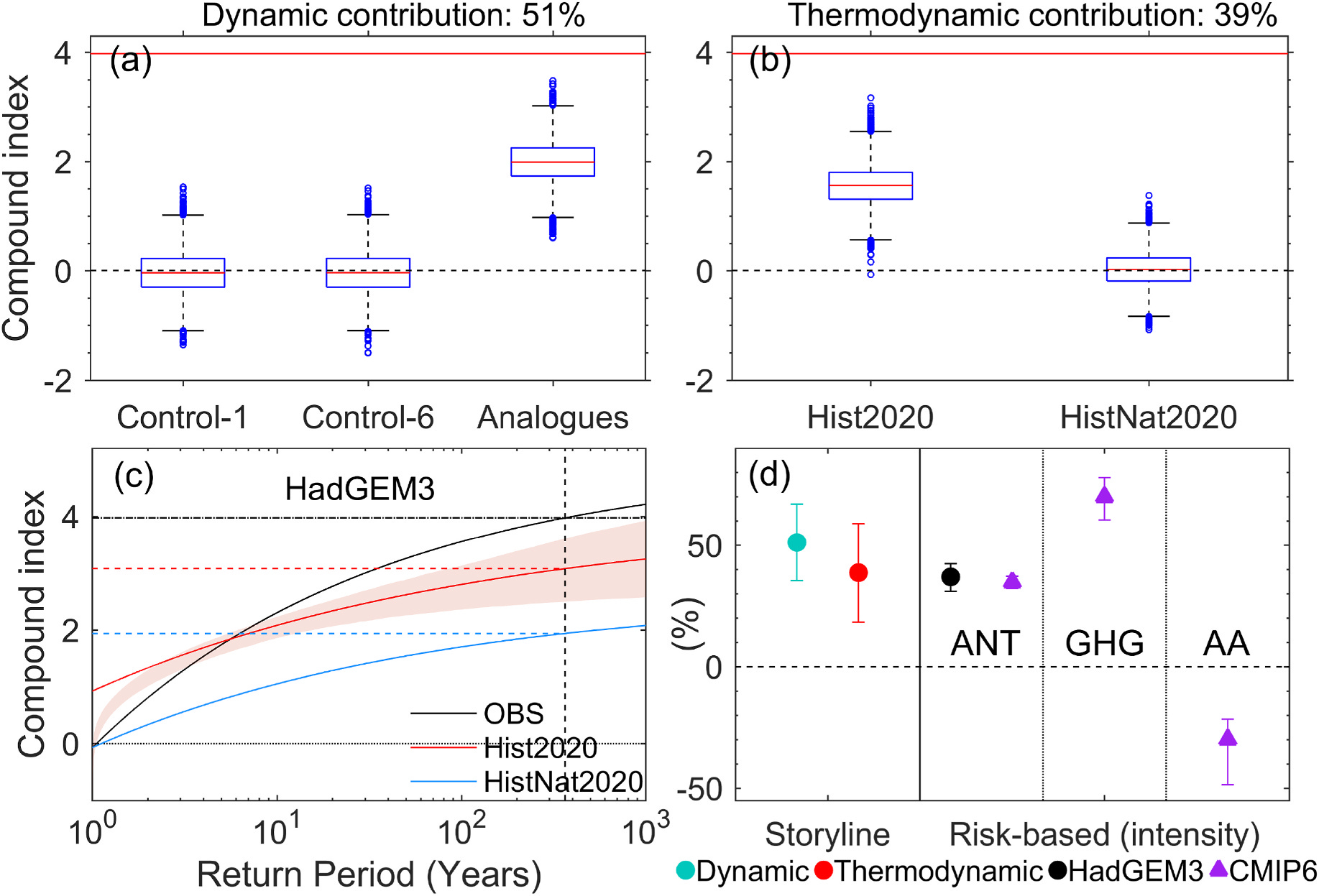
This study treats the record-breaking 2020 Meiyu rainfall along the middle and lower Yangtze River and concurrent heat in South China as one spatially compound event. We developed a combined storyline–probability attribution framework and a constructed flow analogue method. Large-scale circulation and the thermodynamic effects of human influence contributed about 51% and 39% of the event’s intensity, respectively. Compared with a climate without human influence, anthropogenic climate change made similar compound events at least about 10 times as likely.

How much more common these events become depends strongly on the emissions pathway. Relative to the 2001–2020 climate, their probability reaches about 10 times the baseline around mid-century and 14 times toward the end of the century under high emissions. Under low emissions, both periods remain around 7 times the baseline, substantially below the high-emissions projections.

Read article →
Circulation and human-induced warming contributions to the compound event, Figure 2.

Why can extreme rainfall become more likely without more rain on average?

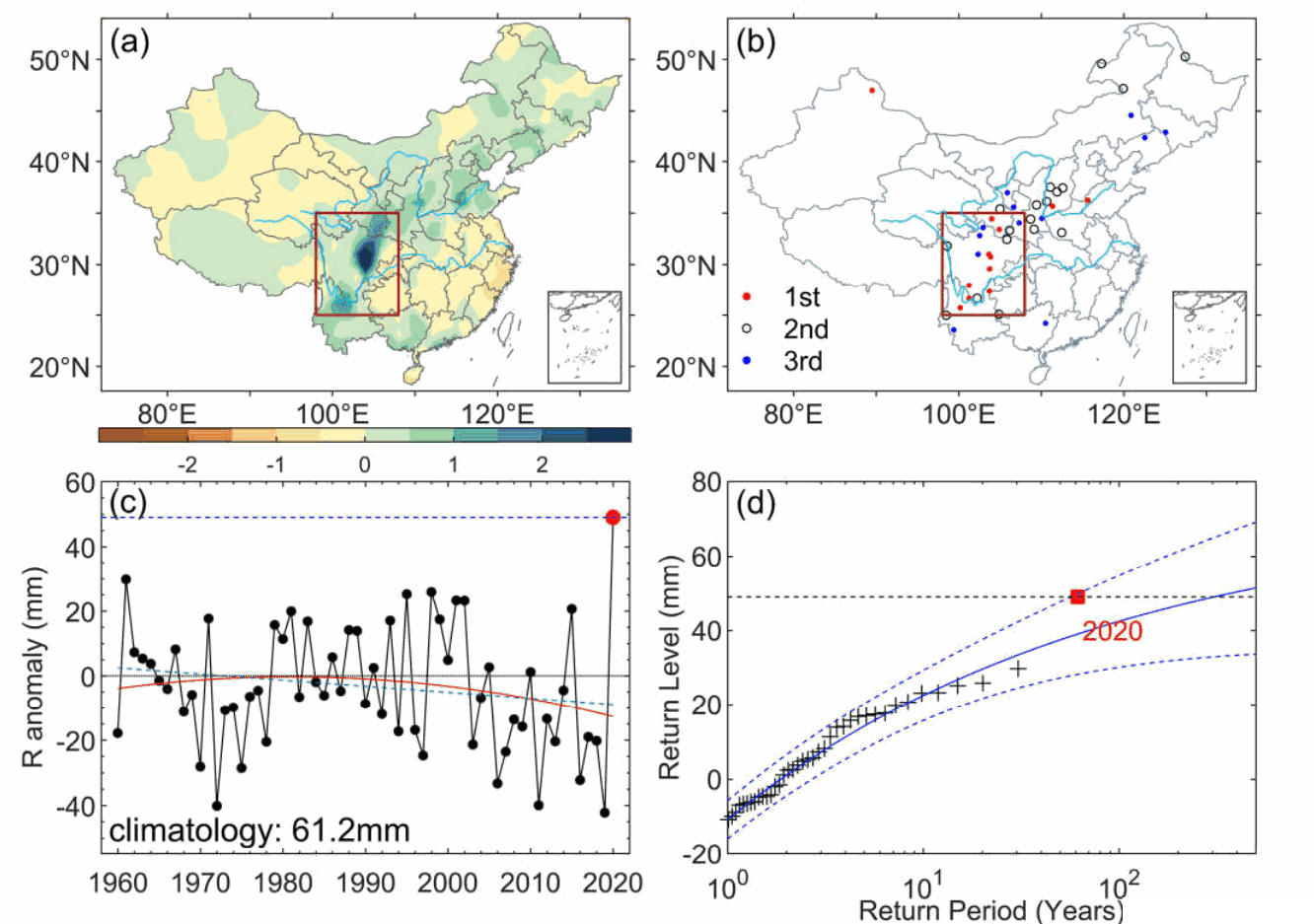
This study looks at the record-breaking persistent rainfall in southwestern China in August 2020 from two angles: why was this particular event so intense, and have human activities changed the probability of similar events? Large-scale circulation explained about 47% of the event’s intensity, while human influence made rainfall at least this intense about 2.4 times as likely. The striking part is that this increase in probability was mainly associated with greater rainfall variability, meaning larger swings from year to year, rather than a steady increase in average rainfall. Extreme rain can become more likely even without a clear long-term trend.

Read article →
Southwestern China rainfall, station records and historical severity, Figure 1a–d.

One circulation pattern: why heavy rain here and heat there?

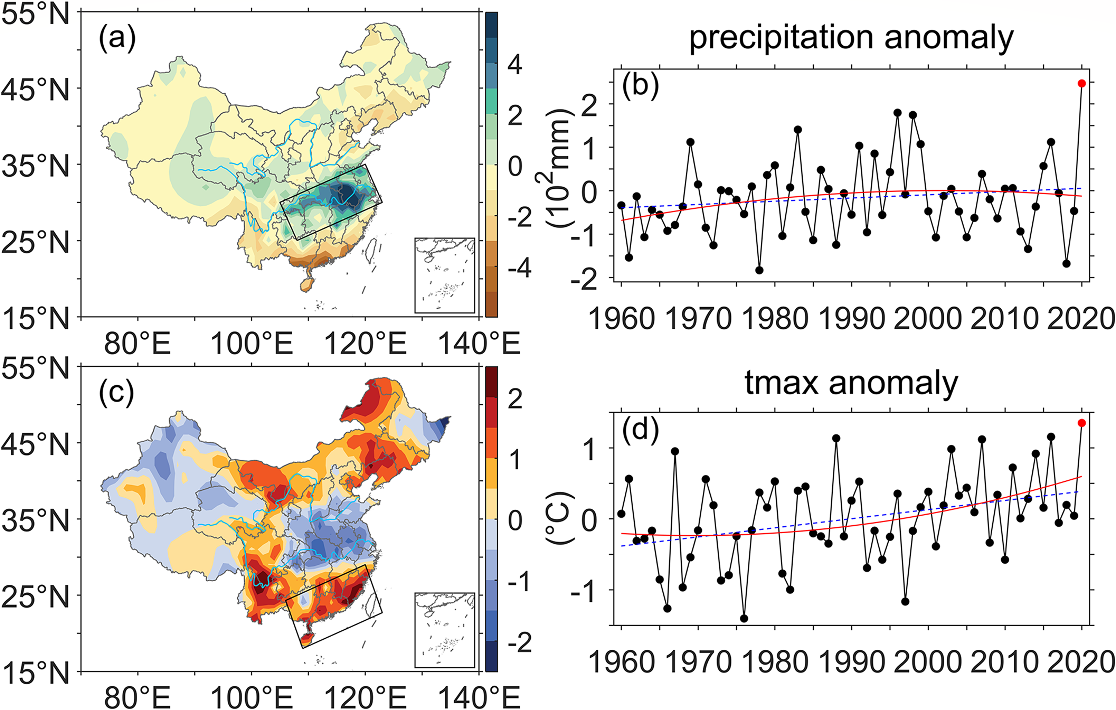
During the 2020 Meiyu season in China, the middle and lower reaches of the Yangtze River saw relentless rain while South China endured persistent heat. These very different extremes were associated with the same large-scale circulation pattern. We wanted to understand how much the atmospheric circulation itself could explain, and what a changing climate background would mean for similar weather patterns.

Circulation explained about 71% of the rainfall anomaly, but only 44% of the heat anomaly. In a warmer climate, similar circulation made both types of extreme more likely, especially heat.

Read article →
Meiyu rainfall and South China heat: spatial patterns and historical evolution, Figure 1a–d.